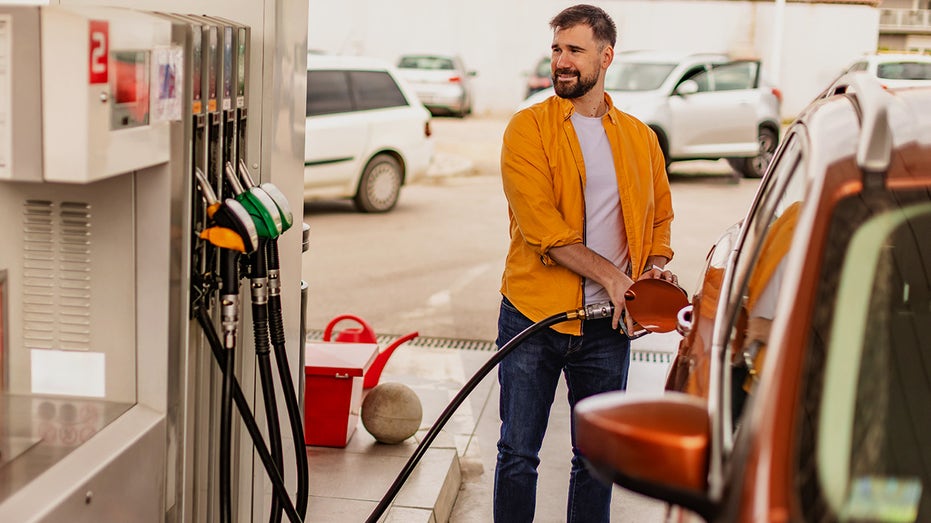
Gas prices are climbing again just as spring travel ramps up, putting added pressure on drivers from road trips to simply commuting to work.
The national average price for regular gas has jumped in recent weeks, climbing to about $3.98 per gallon — up roughly $1 in just the past month, according to AAA. With seasonal demand increasing and oil prices remaining elevated, experts say drivers should expect continued volatility at the pump.
PLANE SEAT LOCATION CRITICAL IN EMERGENCIES AS EXPERTS WARN ROW POSITION IMPACTS SURVIVAL ODDS
Luckily, experts say small changes behind the wheel and simple maintenance habits can help stretch every tank further.
Here are 7 of their best tips.
Speeding, rapid acceleration and hard braking are some of the biggest fuel drains.
Fuel efficiency drops quickly above about 50 mph, The Points Guy recently reported, and federal data shows aggressive driving can cut gas mileage by up to 40% in stop-and-go traffic.
AMERICA’S AIRPORT AFFORDABILITY GAP: CITIES WHERE TRAVEL COSTS ARE CRUSHING FAMILIES
Cruise control can also help keep your speed steady, but experts warn not to use it in slick conditions.
Using premium gas won’t improve fuel economy unless your vehicle specifically requires it.
Most cars are designed to run on regular 87-octane fuel, making it the most cost-effective option, according to AAA.
Using a higher octane than recommended won’t improve mileage or efficiency and typically isn’t worth the added cost.
Underinflated tires increase resistance on the road, forcing the engine to work harder and burn more fuel, experts say.
CLICK HERE TO SIGN UP FOR OUR LIFESTYLE NEWSLETTER
Tires naturally lose about 1 to 3 psi per month, and a 10 psi drop can reduce fuel economy by up to 4%. Pressure can fall even further with colder temperatures or small leaks, making regular pressure checks especially important.
Many drivers believe it’s more fuel-efficient to let a car idle than to turn it off and restart it, but experts say that’s a myth.
A warm engine uses only about 10 seconds’ worth of fuel to restart, meaning idling longer than that wastes gas, and engines can burn up to a half-gallon per hour while idling, according to AAA and government agencies.
CLICK HERE FOR MORE LIFESTYLE STORIES
Letting a car warm up for long periods is also unnecessary, as most vehicles need only about 30 seconds before driving.
Extra weight — especially roof racks and cargo boxes — can significantly reduce fuel efficiency.
Drivers can lose about 1% of fuel economy for every 100 pounds added to a vehicle, and cargo mounted on the roof creates additional wind resistance that can cut mileage by up to 8% in the city and as much as 25% on the highway, according to the U.S. Department of Energy.
TEST YOURSELF WITH OUR LATEST LIFESTYLE QUIZ
Clearing out your trunk or removing unused carriers can help your car go farther on each tank, while rear-mounted cargo options tend to have a smaller impact on fuel economy.
Plan fuel-efficient routes using apps like Google Maps to avoid backtracking and unnecessary stops.
Combining errands into one trip and opting for “one-stop” locations when possible can reduce driving time, especially if you avoid peak traffic and stop-and-go conditions.
Fewer trips also mean fewer cold starts, which use more fuel, helping drivers save gas over time, according to federal guidance.
Air conditioning can increase fuel use — by up to 10%, in some cases — while open windows also reduce efficiency by creating drag, so experts recommend adjusting based on speed.
At lower speeds, windows can be more efficient, but on highways it’s better to close them and use A/C, ideally after airing out a hot car to reduce the strain on the system.